
When God Orders the Steps – Jonah

Jonah 4: 2

He prayed to the Lord and said, “Please Lord, was not this what I said while I was still in my own country? Therefore in order to forestall this I fled to Tarshish, for I knew that You are a gracious and compassionate God, slow to anger and abundant in lovingkindness, and one who relents concerning calamity.

The Prophet Jonah lived during the reigns of King Jeroboam of Israel and King Amaziah of Judah. The Assyrians were the dominant tyrannical empire of the time. They were gaining strength and word reached the Israelites about the ruthlessness and brutality of the Assyrians. History records that entire villages would commit suicide if they heard the Assyrians were coming. They thought death by suicide was better than the impending torture that the Assyrians would bring on them. These brutes were infamous for skinning people alive, hooking their jaws and carry them into captivity. They would raid, pillage and capture entire towns.

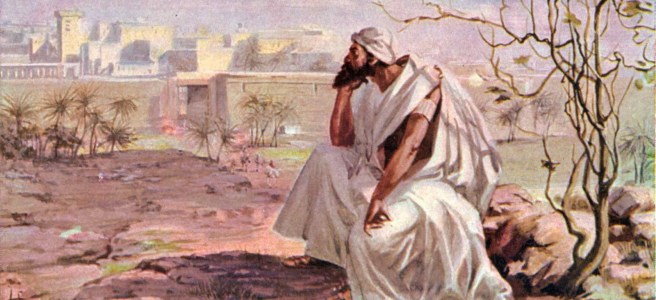
When Jonah was commissioned to go to Ninevah to pray for them, Jonah thought it was a ridiculous idea. In his heart, he determined that they were not a worthy people to save. He’d rather see them come under God’s wrath than pray for their salvation. Such was his aversion to the Assyrians. Jonah’s prejudice against the Ninevites caused him to flee in the opposite direction. Jonah was supposed to be the intercessor on behalf of the Ninevites. In His mind, he thought, if there was no one who can pray for the Ninevites, then God will eventually bring His wrath on them. He sincerely felt they deserved God’s judgment for their evil. However, God had other plans. God used a mighty storm and a great fish to bring Jonah to Ninevah. Reluctantly, he told the Ninevites of their impending doom if they didn’t repent. Fearing God’s wrath, the entire city of Ninevah repented from the oldest to the youngest, from the king to the poor man. Even the beasts of the field fasted and were covered in sack cloth. The entire city was thus saved from God’s wrath. A pagan kingdom feared God Almighty and repented of their evil ways.

We, in our own lives may have come across people who we think aren’t worthy to hear the Gospel. We carry that prejudice against murderers, rapists, terrorists and all kinds of bad people. Inadvertently, we have passed a judgement on them. We have decided they weren’t worthy to be saved and would prefer them to be eternally separated and cast into hell fire. For such people, instead of praying for their salvation, we are more excited for their condemnation. Who are we to condemn someone? Aren’t we all sinners? There may be a degree of sin but we all are sinners. Pastor Gary Hamrick of Cornerstone Chapel, Leesburg, VA coined a phrase: mercy for me, judgment for thee. How selfish we are when we seek mercy for ourselves but expect judgment for others! We don’t try to place ourselves in their shoes when we have to show mercy.

Jonah, disappointed that the Ninevites repented and didn’t suffer God’s wrath, was very upset with God. He went out of the city pouting and fuming at God. Just a few days prior, when he was in the belly of the great fish, he cried out to God to save his life. God heard him and saved his life. Right in front of Jonah’s eyes, the entire city of Ninevah cried out to God and repented and God spared them of His wrath. Jonah was angry, miserable and frustrated with God’s mercy towards these pagan people. God was trying to teach him that every nation, tribe and tongue belong to Him and He has every right to save them. He was not willing to judge them by bringing wrath upon them where innocent people lived.

Dear Saints, the reluctant prophet, Jonah, was unforgiving, merciless and prejudiced towards the people of Ninevah. Even though the Ninevites were pagan people, God still chose to save them. However, we serve a mighty God, our Savior, Redeemer, who is forgiving, merciful and loving towards all those who believe in Him. We should be merciful, non-judgmental towards non-believers and intercede on their behalf for their salvation. However scarlet our sins may be, we serve a merciful and a righteous God, who is willing to make them as white as snow (Isaiah 1: 18). God ordered the steps of even this reluctant prophet to fulfill His purposes. How much more He is willing to do His great and mighty deeds through those of us who are willing to do His bidding!

**As an Amazon Associate I earn from qualifying purchases.

Utmost Obedience of Rechabites

Jeremiah 35: 5 – 10

Then I set before the sons of the house of the Rechabites bowls full of wine, and cups; and I said to them, “Drink wine.” 6 But they said, “We will drink no wine, for Jonadab the son of Rechab, our father, commanded us, saying, ‘You shall drink no wine, you nor your sons, forever. You shall not build a house, sow seed, plant a vineyard, nor have any of these; but all your days you shall dwell in tents, that you may live many days in the land where you are sojourners.’ Thus we have obeyed the voice of Jonadab the son of Rechab, our father, in all that he charged us, to drink no wine all our days, we, our wives, our sons, or our daughters, nor to build ourselves houses to dwell in; nor do we have vineyard, field, or seed. 10 But we have dwelt in tents, and have obeyed and done according to all that Jonadab our father commanded us.

Rechabites are an interesting group of people that pop up a few times in the Bible. Historically, their family line can be traced back to Midianite Jethro, father-in-law of Moses. In this portion of Jeremiah 35, the Bible records an exclusive group of people who have laid down strict laws and have adhered to the vows that their forefather Jonadab (Jehonadab) has vowed before the Lord. Here is a nomadic tribe which has set itself apart and has never assimilated into the society that they were living nearby. Instead, they have kept their forefather’s vow for generations.

The Prophet Jeremiah in order to compare and contrast the faithfulness and obedience of a nation/tribe (in this case, a small group of loyal people) to the faithless and disobedient nation of Israel, brings the whole house of Rechabites along with other men into the house of the Lord. He places wine in front of them and asks them to drink. However, the Rechabites fiercely defended their forefather’s oath and refused to take the wine.

On one hand, the Israelites, despite God’s repeated warnings through His prophets, tend to easily forget their loyalty to the Lord. At every opportunity they get, they stray away to different idols and find themselves in trouble. A loving God comes to their rescue every time. Jeremiah, utilizing the exemplary lifestyle of Rechabites, reminds the people of Judah that Rechabites have been so faithful through all generations because of the oath of their ancestor, a mere man. How much more the Israelites must obey the true and living God!

Jonadab (Jehonadab) was the man, who jumped into the chariot of Zealous Jehu to wipe out Baal from the land of Israel. (2 Kings 10: 15) Jehu knew in his heart that Jonadab was the man who can help him eliminate Baal and Ashtoreth worshippers from the land of Israel. Both men were responsible in bringing to a halt the atrocities and abominations committed by Ahab and Jezebel. Centuries and several generations later, the descendants of this valiant hero, still remained faithful to the promise of their forefathers. They upheld every aspect of the vow that Jonadab vowed before the Lord. Such was their faithfulness to their forefather!

Jeremiah reminded the people of Judah that when people like Rechabites were willing to obey their father’s vow dutifully, why couldn’t the children of Israel despite several warnings from the Lord still chose to disobey Him. God honored the Rechabites by promising them that they will never lack a man to stand before the Lord.

Jeremiah 35: 18 – 19

18 And Jeremiah said to the house of the Rechabites, “Thus says the Lord of hosts, the God of Israel: ‘Because you have obeyed the commandment of Jonadab your father, and kept all his precepts and done according to all that he commanded you, 19 therefore thus says the Lord of hosts, the God of Israel: “Jonadab the son of Rechab shall not lack a man to stand before Me forever.” ’ ”

Dearly beloved, where do our loyalties lie? Are we willing to obey the Lord God Almighty implicitly and take Him at His Word? Do our lives reflect our faithfulness and obedience to God or do they reflect worldly desires? Just imagine hearing the blessing from a prophet of God for their faithfulness in keeping their forefather’s vow. They may not have expected any kind of blessing or promise. They were only obeying the vow of their forefather. God honored their faithfulness and blessed them with such a blessing. Let us also remain faithful and obedient to the One and only True God because in obedience there is blessing.

1 Samuel 15: 22

22 So Samuel said, “Has the Lord as great delight in burnt offerings and sacrifices, as in obeying the voice of the Lord? Behold, to obey is better than sacrifice, and to heed than the fat of rams.

https://amzn.to/3G5CUCN

*** As an Amazon Associate I earn from qualifying purchases.